


Diversification and risk management — it's the bedrock of every good retirement plan. So why not apply the same principle to the global economy? The smartest systems don’t go all-in on one extreme or isolate themselves in a bubble. They spread risk, build resilience, and stay flexible. That’s exactly the mindset we need right now.
Meet my daughter, Ozzi. She’s the joy of my life — the happiest little girl you’ve ever seen, and I couldn’t be more in love with her.

One of my favorite things about her is this absolutely over-the-top Fourth of July outfit we got her. It was meant for one loud, patriotic party — stars and stripes everywhere, “USA, AMERICA, USA” stitched in bold letters. But Ozzi? She fell in love with it. Wears it constantly.
Here’s the kicker: inside the tag, it says “Made in China.”
It’s funny. It’s ironic. But it also hits a nerve — because underneath the red, white, and blue is a quiet reminder of just how entangled we are in the very system so many are trying to unravel.
A few weeks ago, we watched Sonic the Hedgehog for our movie night. She lit up. Total awe. And who shows up as the villain? Jim Carrey — wild, hilarious, brilliant. Naturally, we had to then watch Dumb and Dumber and The Truman Show (my wife had never seen either, so I had to fix that).
Watching those films back-to-back, I couldn’t help but see two competing visions of our economy. One is the Buy Now, Pay Later economy — the Dumb and Dumber mindset where IOUs replace real value and we all pretend it’s fine. The other is the Truman Show economy — a curated, self-contained world built entirely in-house, insulated from global reality.
The headlines are loud right now. Everyone's suddenly a trade expert — on tariffs, deficits, TikTok bans, interest rates. But sometimes you’ve got to zoom out, breathe, and explain things simply. So, let’s do just that:
Let’s break down the Dumb and Dumber economy versus the Truman Show economy — and why the U.S. seems to be playing both parts in a full-blown market identity crisis.
The Dumb and Dumber Economy: Buy Now, Pay Later
Remember the scene in Dumb and Dumber where Lloyd drops thousands on a Lamborghini, tuxedos, and fur boots — all with someone else’s money? He doesn’t leave cash. He leaves IOUs. “That's as good as money, sir. Those are I.O.U.'s. Go ahead and add it up, every cent's accounted for. Look, see this? That's a car. 275 thou. Might wanna hang onto that one.”
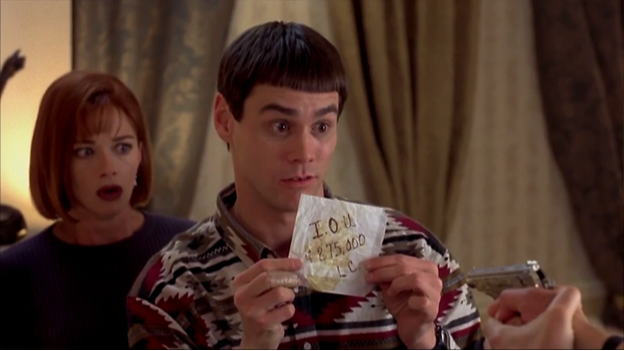
Absurd? Sure. But kind of familiar, right?
Let’s look at just one real world example: In 2024, the U.S. ran a $124 billion trade deficit with Vietnam. We exported $13 billion in goods. They sent us $137 billion. That’s a 10-to-1 imbalance. So, what did they get in return?
Simple: IOUs. U.S. Treasuries. A promise from the strongest country in the world that we’ll pay them back — someday, with interest.
This isn’t unique to Vietnam. It’s been the global trade model for decades. But who’s really getting shortchanged?
Imagine this: you spend years sending your best goods, labor, and resources to someone. In exchange, you get paper. IOUs. Then, one day, those IOUs lose value and the promise begins to vanish.
Who got burned?
Was it the person who spent years enjoying TVs, iPhones, Sonic toys, and cheap clothes? Or the one holding paper that no longer means anything?
This is the real fear rippling through the markets — not just inflation or rates, but a crisis of faith in the IOU system itself. The U.S. is floating unpredictable trade policies.
Negotiations are erratic. And the world is asking: What if the promise isn’t good anymore?
The Truman Show Economy: Made in America, Trapped in a Bubble
Now flip the script. Say we ditch the IOUs. We stop importing so much. We try to bring everything back home — rebuild factories, create jobs, go full “Made in America.”
Welcome to The Truman Show.
Truman Burbank lives in the perfect little town. Everything he needs is right there. A dome and walls surround the world as he lives completely cut-off from the outside world.
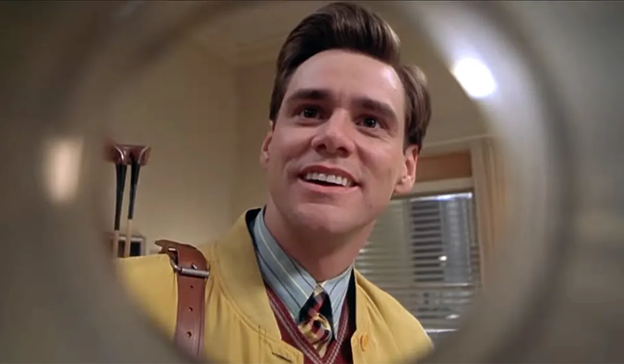
What if America becomes Truman?
We pull back. We stop relying on global supply chains. We stop tapping into the world’s labor, ideas, and raw materials. We make it all here — the clothes, the chips, the toothbrushes. It feels patriotic. Self-sufficient. Controlled.
But also: isolated. Slower. More expensive. Less innovative. The world produces wonderful things — smartphones in China, robotics in Japan, wine in France, coffee in Ethiopia, vibrant agriculture in Brazil, and cutting-edge medical breakthroughs from the U.S. From every continent comes a piece of progress, of beauty, of brilliance — proof that when nations collaborate, innovation accelerates. Brilliant tools, elegant design, life-saving innovations — all flowing across borders, shaped by global collaboration.
Global interdependence isn’t a weakness — it’s a strength. Access to the world’s best talent, fastest tech, and cheapest inputs is what fuels modern growth. Lock yourself in a bubble, and eventually you stagnate. Just like Truman.
Everything in Moderation
April 2025 hit like a cold downpour. The market crashed. Confidence cracked. Trade relationships buckling under political pressure.
But maybe — just maybe — this is the storm before the bloom.
Real investment is happening: TSMC, Apple, and others are planting real roots in U.S. soil. If we’re serious about reducing trade deficits, we can’t just slap tariffs on Vietnam and expect them to buy $124 billion more in American goods. That’s not how this works.
We have to build — facilities, systems, supply chains, talent, robotics, automation. Reimagine “Made in America” not as a slogan, but a strategy. And strategies take time. You don’t bloom in May if you never planted in April.
So how does it feel out there right now?
Wild. Uncomfortable. Slightly unhinged. That’s the vibe.
But that’s also the invitation. To zoom out. To laugh. To get clear.
Because whether we’re handing out IOUs in a Dumb and Dumber economy, or sealing ourselves into a Truman Show fantasy, the truth is: we’re in the middle of something big.
The question isn’t whether the system will change — it’s how we choose to build what comes next.
Do we want a brittle, one-dimensional economy? Or a diversified, forward-looking one that embraces innovation, resilience, and the best of what the world has to offer? Just like a good portfolio, the future will favor balance over bravado.
Disclosures
This material has been prepared for informational purposes only and should not be construed as a solicitation to effect, or attempt to effect, either transactions in securities or the rendering of personalized investment advice. This material is not intended to provide, and should not be relied on for tax, legal, investment, accounting, or other financial advice. You should consult your own tax, legal, financial, and accounting advisors before engaging in any transaction. Asset allocation and diversification do not guarantee a profit or protect against a loss. All references to potential future developments or outcomes are strictly the views and opinions of Richard W. Paul & Associates and in no way promise, guarantee, or seek to predict with any certainty what may or may not occur in various economies and investment markets. Past performance is not necessarily indicative of future performance.