Charts
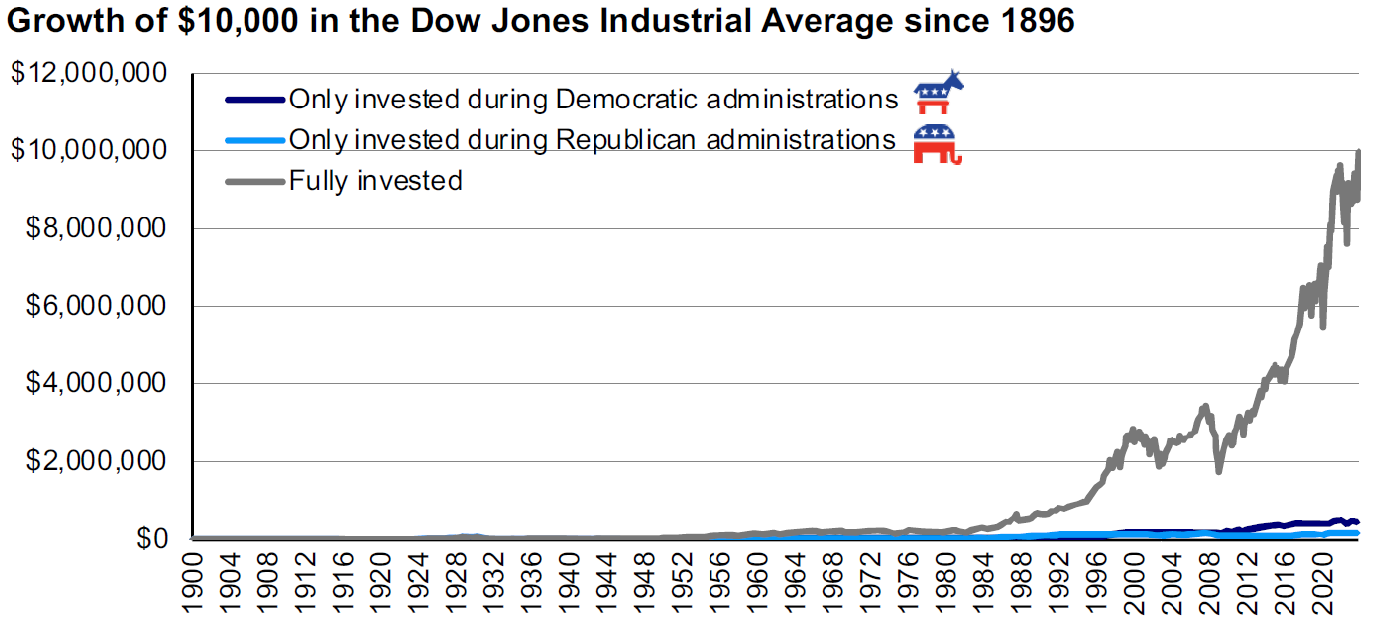
Source: Haver, Invesco, 12/31/23. The Dow Jones Industrial Average is a price-weighted index of the 30 largest, most widely held stocks traded on the New York Stock Exchange. An investment cannot be made in an index. Past performance does not guarantee future results.
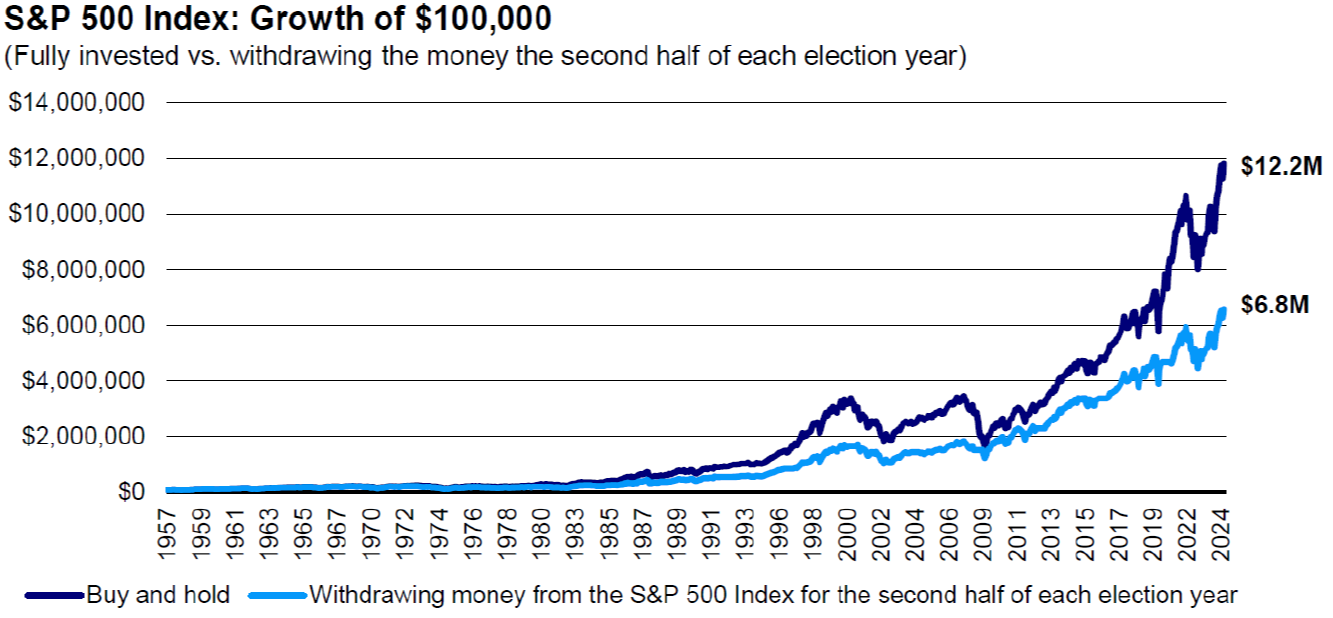
Source: Bloomberg L.P., Invesco, 6/30/24. This is a hypothetical illustration and doesn’t represent the performance of an actual account. It assumes the entire portfolio amount is withdrawn at the end of June during a presidential election year and then reinvested in the S&P 500 Index at the beginning of January the following year. An investment cannot be made directly into an index. Past performance does not guarantee future results.
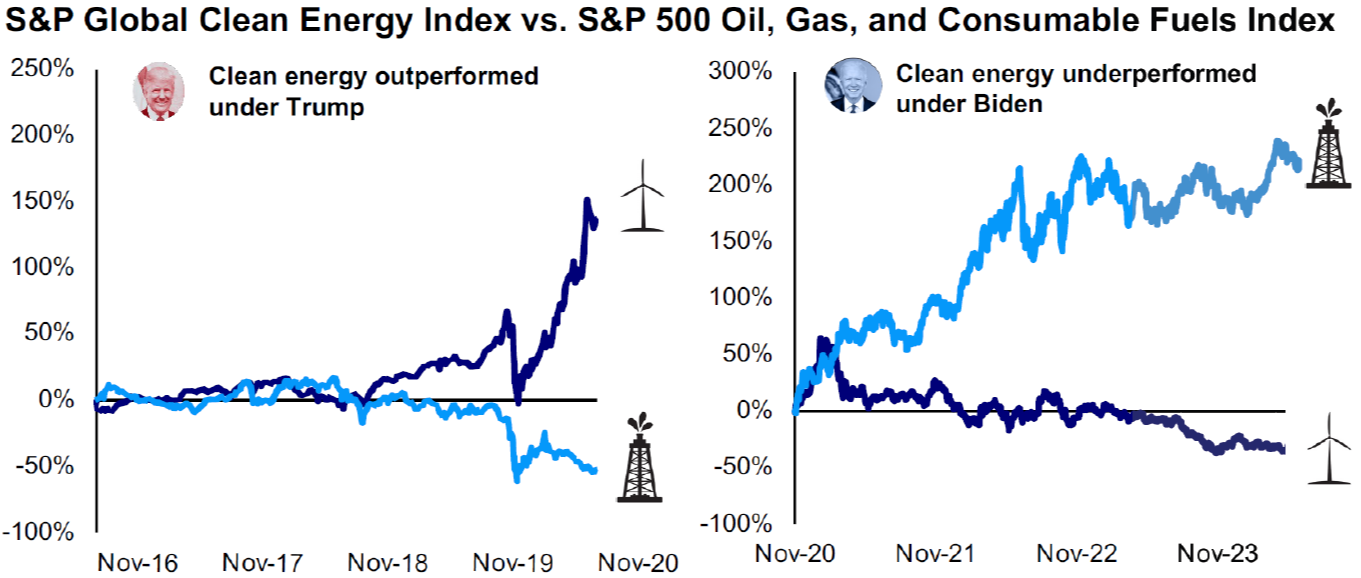
Sources: Haver, Invesco, 6/30/24. The S&P Global Clean Energy Index is designed to measure the performance of companies in global clean energy-related businesses from both developed and emerging markets, with a target constituent count of 100. The S&P 500 Oil, Gas, and Consumable Fuels Index is a GICS level 3 index, representing the oil, gas, and consumable fuels industries within the S&P 500 Energy sector. An investment cannot be made in an index. Past performance does not guarantee future results.
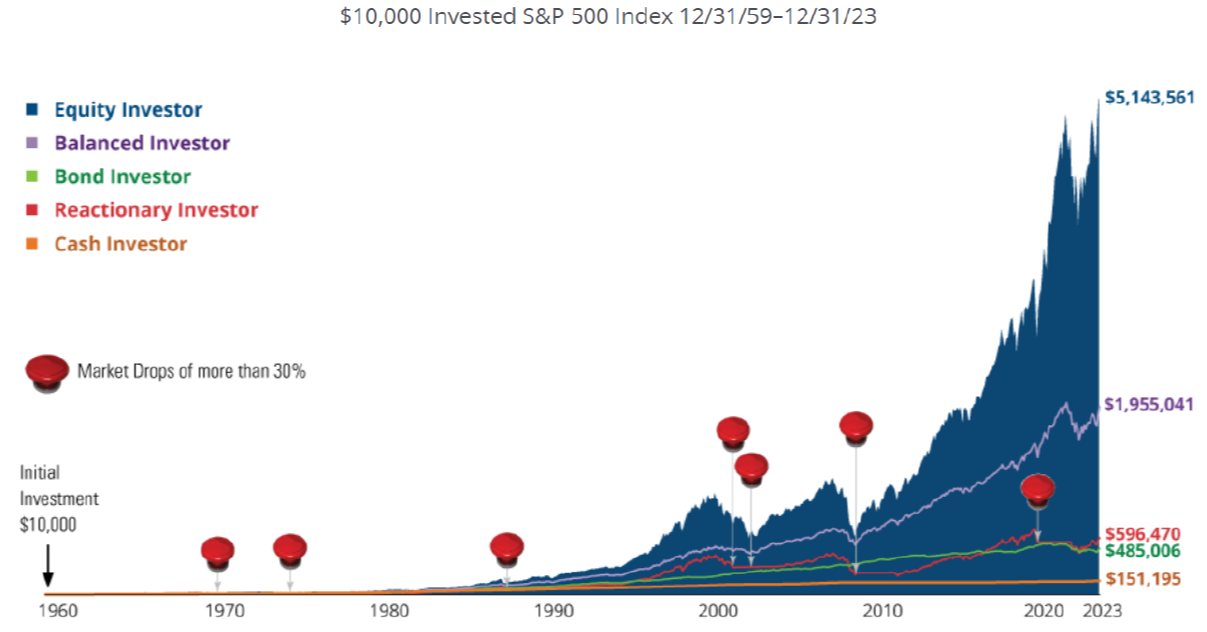
Sources: https://www.hartfordfunds.com/insights/investorinsight/investor-behavior/media-replay/the-price-of-panic.html
Reactionary returns indicate the results of an investor who invested in S&P 500 Index, moved 100% into 90-Day T-Bills each time the market dropped 30% and then moved 100% back into S&P 500 Index two years later.